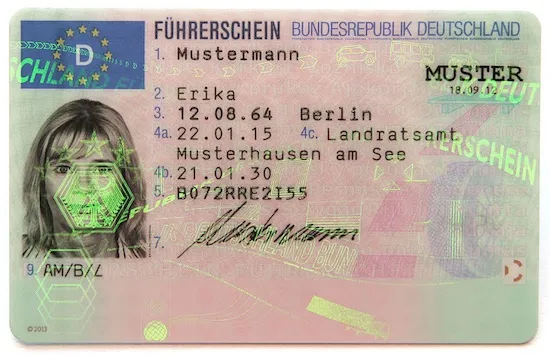
Germany extends deadline to exchange older driving licences

Germany is currently in the process of exchanging millions of older paper driving licences, to comply with new EU regulations requiring them to be uniform across the bloc, forgery-proof, and recorded in a centralised database. With about 43 million licences needing to be swapped by 2033, the federal republic is proceeding in stages to avoid overwhelming driving licence authorities in citizens’ offices and other locations.

The virus that shut down the world: 2020, a year like no other

COVID-19 is everywhere, literally, and during 2020 its spread and resulting impact has led to a global crisis of unprecedented reach and proportion. In a six-part series closing out this tumultuous year, UN News looks at the impact on people in every part of the world and some of the solutions that the United Nations has proposed to deal with the fall-out of the pandemic. In this first feature, we lay out some of the key events of the past 12 months.

How Germany contained the coronavirus

Compared to many other countries, Germany has managed the COVID-19 crisis well, owing to its properly funded health system, technological edge, and decisive leadership. But beyond any unique feature of the German system is something that all countries can replicate: a strong commitment to building public trust.
Germany is often referred to as a positive example of how to manage the COVID-19 pandemic. We were successful in preventing the overburdening of our health system. The curve of infections is clearly flattening. And the proportion of severe cases and fatalities is lower in Germany than in many other countries. But this makes us humble, rather than overconfident.

The outbreak of COVID-19: An overview

In late December 2019, a previous unidentified coronavirus, currently named as the 2019 novel coronavirus#, emerged from Wuhan, China, and resulted in a formidable outbreak in many cities in China and expanded globally, including Thailand, Republic of Korea, Japan, United States, Philippines, Viet Nam, and our country (as of 2/6/2020 at least 25 countries). The disease is officially named as Coronavirus Disease-2019 (COVID-19, by WHO on February 11, 2020). It is also named as Severe Pneumonia with Novel Pathogens on January 15, 2019 by the Taiwan CDC, the Ministry of Health and is a notifiable communicable disease of the fifth category. COVID-19 is a potential zoonotic disease with low to moderate (estimated 2%–5%) mortality rate. Person-to-person transmission may occur through droplet or contact transmission and if there is a lack of stringent infection control or if no proper personal protective equipment available, it may jeopardize the first-line healthcare workers. Currently, there is no definite treatment for COVID-19 although some drugs are under investigation. To promptly identify patients and prevent further spreading, physicians should be aware of the travel or contact history of the patient with compatible symptoms.

Getting a German Driver’s License

How Long is a German Führerschein Valid?

You may have heard that a German driver’s license has no expiration date, but that is no longer true. That changed in 2013 when, conforming to EU guidelines, German driving licenses became valid for only 15 years. Licenses issued before January 19, 2013 will expire no later than January 19, 2033. If you obtain a German Führerschein now, it will expire in 15 years.